
Row Houses
"One day, I saw an elderly woman squatting outside the barbed wire fence of our yard, happily counting my melons."
29 Oak St, Boston, MA 02111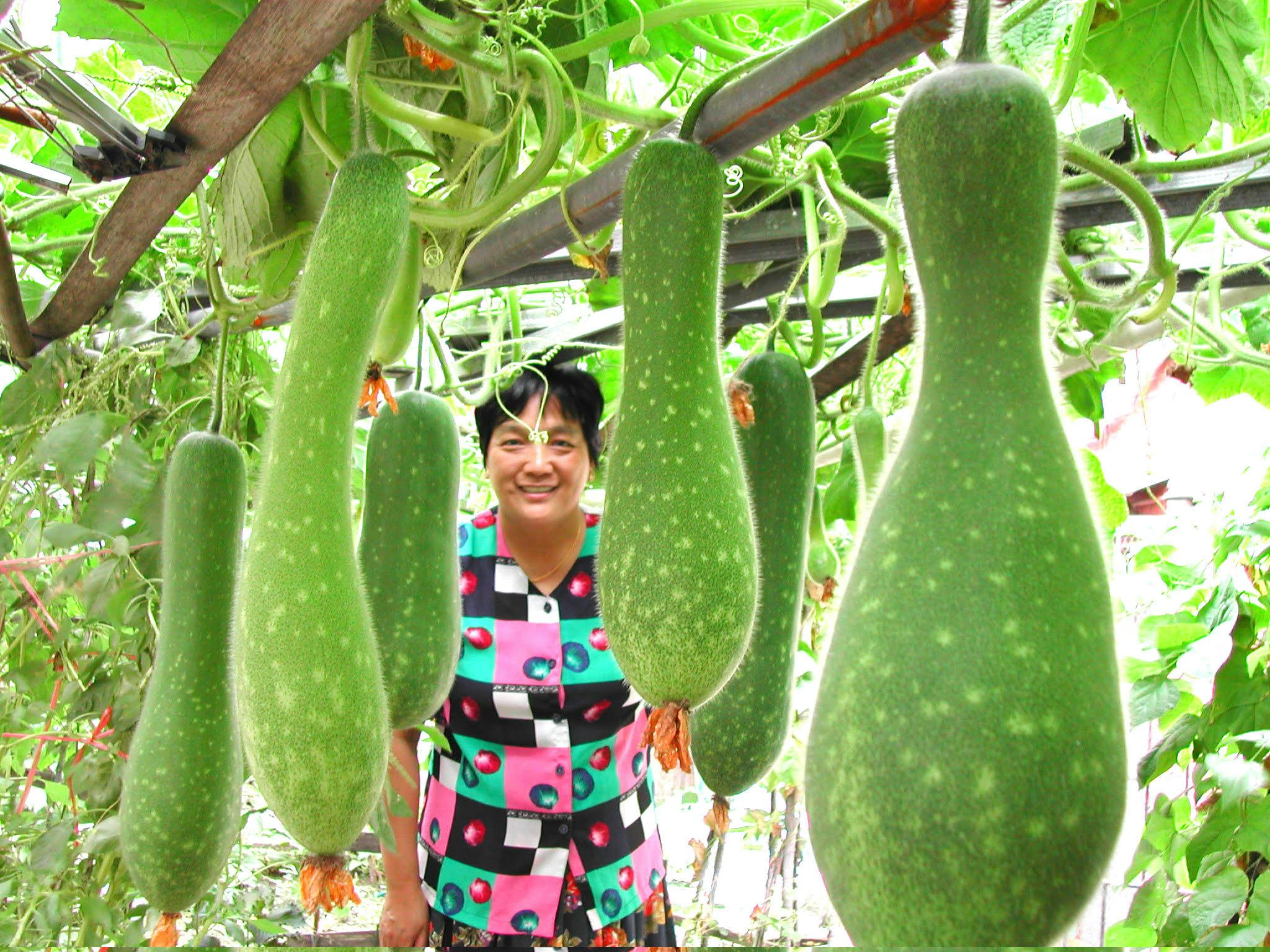
Former resident Tang Jianhua in her backyard garden on Johnny Court. (CPA photo by Kye Liang)
Boston Chinatown has two centuries of history as an anchor neighborhood for successive waves of immigrant working-class families. The neighborhood was home to Irish, European, Syrian/Lebanese, Jewish, and African American families, as well as the Chinese. Much of Chinatown was known as Little Syria in the early 20th century, becoming more heavily Chinese after the repeal of the Chinese Exclusion Act in 1943.
The Oak Street and Johnny Court row houses preserve the small-scale character of the original South Cove neighborhood. These homes were developed by landowner John Wells between 1832-1837, when the tidal flats were reclaimed and completed during an economic depression known as the Panic of 1837.
Chinatown was wracked by Urban Renewal in the 1950s and 60s, hospital and university expansion through the 1980s, followed by a wave of luxury high-rise developments. Many row house homes then fell prey to the short-term rental market before local regulations began in 2018.
This row house at 29 Oak Street is Boston's first condominium that is permanently preserved as affordable housing through a 99-year community land trust ground lease established by the Chinatown Community Land Trust.
When we lived in Johnny Court, Oak Terrace and Quincy Tower were nearby, as well as some elderly housing buildings. In the evenings, some residents would pass by the row houses on their after-dinner walk. I saw an elderly woman squatting outside the barbed wire fence of our yard, happily counting my winter melons. A real sense of accomplishment emerged at that time, 'Ha, I was a teacher for 28 years, and I learned how to grow melons after coming to the states.' Our neighbors to the left and right, in all the row houses on the entire street were all Chinese. We had no language barriers. After meals, we greeted each other and chit-chatted on the stoop. Life was quite fun. Transportation was also convenient, it was easy for me to study English and seek help from civic organizations. I also had a piece of land to grow produce, it was my own happy little world.
I harvested over 20 winter melons each year, weighing 200+ pounds in total. Some melons were 8 or 10 pounds, one of them weighed over twenty pounds! I stored them in our basement to be consumed slowly throughout the year. When it snowed in the winter and I couldn't go out to buy produce, I cut up winter melons to make soup - lean meat soup, pork bone soup, bean soup, chicken soup... It's also delicious when braised with dried shrimp and fermented bean curd. Regardless if you stew or stir-fry, winter melons can be enjoyed in many ways. I shared my harvest with friends and relatives at times, who were all ecstatic to receive them. They would slowly and stingily consume the melons, reluctant to gobble them up immediately.
Source: Tang Jianhua
Learn More
Check out more resources submitted by our community.
by Daphne Xu